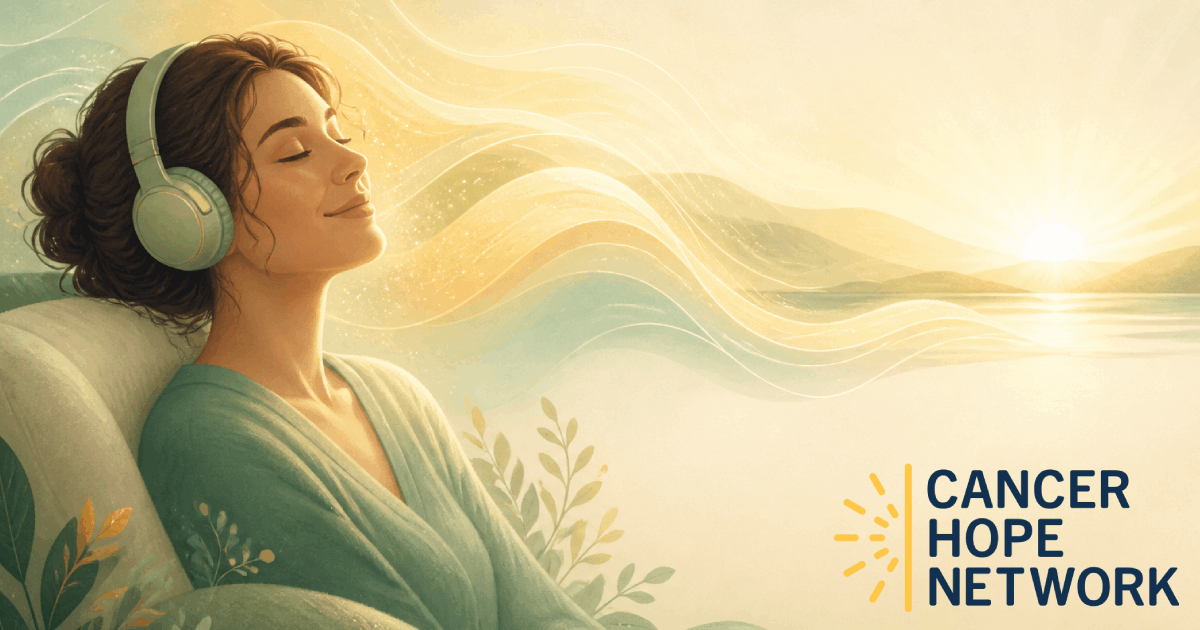
Cancer Hope Network (CHN) has spent 45 years making sure no one faces cancer alone. Now they do it in audio too.
Some days during cancer treatment, reading a page of anything feels like climbing a hill. The words swim. The energy just isn't there. You read the same sentence four times and still miss it. Anyone who has sat through chemo or radiation therapy, or sat beside someone who has, knows that exact feeling.
That's the small, human problem Beth Blakey and her team at Cancer Hope Network set out to fix when they started turning their written support materials into audio. And honestly, it's a lovely thing to watch.
The people who answer when cancer calls
It started in 1981 with a question. An oncology nurse named Diane Paul kept hearing it from her patients, “Do you know anyone else going through this? Can I talk to them?” She thought the answer should be yes. So along with a fellow nurse, Kris Luka, and a group of volunteers from the local Junior League, she started a small program called CHEMOcare, pairing people facing chemotherapy with someone who had already come out the other side. That first year, they reached 14 patients. Today the number is well past 60,000. That small program grew into Cancer Hope Network, the first one-on-one peer mentorship support of its kind in cancer care, and the blueprint a lot of others would follow.
More than forty years later, the idea is still beautifully simple. If you're facing cancer, or caring for someone who is, they match you with a trained volunteer mentor who has already walked the same road. Similar cancer, similar treatment, similar fears. Someone who picks up the phone and says, in so many words, I made it through this, and I'll stay with you while you do too.
Their own line says it better than we ever could:
We care because we've been there.
And the reach is quietly staggering. More than 680 trained peer survivor and caregiver mentors. Over 60,000 people supported. More than 150 kinds of cancer represented. Mentors who speak 16 or more languages, including a full Spanish program, CHN En Español, so people are met in the language they actually live in. There's Hopeful Hearts for parents of children with cancer, and TACT (Talking About Clinical Trials) for anyone trying to decide on, or needing answers to questions about, participating in a clinical trial. Free. Confidential. Every single time.
Where the audio comes in
Here's the thing about cancer information. There's a mountain of it, and it tends to arrive exactly when a person has the least energy to take it in. Treatment plans. What to expect this week. And these lead to questions to ask the doctor. Page after page, often handed to someone who is overwhelmed, nauseous, wiped out, foggy, or simply frightened. And it isn't only patients. Caregivers are reading all of it too, late at night, trying to help and advocate for someone they love. Most of all, they need to turn fear and uncertainty into hope.
So Beth started using FreeTTS to transform the written words of mentor and mentee Impact Stories into natural sounding audio. Now they are truly “Voices of Hope” and a person can close their eyes and listen instead of squinting at a page. They can play it in the infusion chair, in the car on the way home, or lying awake at 2am when sleep won't come. Listening to these stories helps inspire the patient running on empty, the older caregiver whose eyes tire quickly, and anyone who simply takes things in better by ear. And because Cancer Hope Network serves Spanish-speaking people with cancer and their loved ones too, the audio gets made in Spanish as well. Not as an afterthought. As part of how they reach everyone.
What we love, and what tells you everything about CHN, is how much care goes into the tiny details. They've gone back and forth with us about the pacing. Where the pauses should fall. How to make a voice sound optimistic, calm, and unhurried instead of rushed, because someone listening to this isn't skimming a blog post. They're holding on to it. Getting a half second of silence to land in the right spot sounds like a small thing. It's actually the whole job. It's the difference between handing someone information and handing them a little bit of comfort.
In Beth's words
For the people we support, energy is precious, and some days reading just isn't possible. Being able to give someone audio they can simply relax and listen to, in English or in Spanish, means everything. FreeTTS let us do that ourselves, for free, and for a nonprofit that matters more than I can say.
Beth Blakey, CEO, Cancer Hope Network
Why this one means a lot to us
We didn't build FreeTTS picturing it would end up in an infusion center. But this is the use we're proudest of. Cancer Hope Network does the hard, deeply human work of showing up for people on their worst days, and they've been doing it since before most software companies existed. If a free tool can take one small thing off their plate, and help a tired person with cancer or their caregiver hear a kind, clear voice instead of fighting through a page, then we're doing something right.
So this is a thank you as much as it's a story. Thank you to Diane Paul and Kris Luka for deciding, back in 1981, that no one should go through this alone. Thank you to the hundreds of mentors who keep picking up the phone, sending a text, joining a video chat, and sharing their stories. And thank you to Beth, for caring about the tone, pace, and where the pauses go.
For nonprofits
If you run a nonprofit doing work like this, our Nonprofit Program gives you FreeTTS PRO free, for good.
Explore the Nonprofit ProgramTo learn more about Cancer Hope Network or to donate, please visit cancerhopenetwork.org.